1. The Real Cost of Plumbing Leaks and Water Damage
According to insurance industry data, water damage from burst supply lines, leaking water heaters, and failing appliance hoses is one of the most frequent and costly types of residential property claims. A minor pinhole leak in a braided steel washing machine hose can release over 600 gallons of water in a single hour, warping hardwood floors, destroying ceiling drywall, and triggering invasive mold remediation within 24 to 48 hours.
Traditional plumbing fixtures offer zero warning before failing. Homeowners typically discover plumbing leaks after returning home from work or vacation to find standing water. The financial fallout often involves high insurance deductibles, temporary relocation expenses, and rising annual policy premiums following a claim.
Smart leak prevention systems eliminate this vulnerability by turning passive plumbing infrastructure into an intelligent, responsive digital network that detects abnormal moisture levels in milliseconds.
2. How Smart Water Leak Detectors and Automatic Valves Work
Smart water monitoring systems operate using two distinct hardware components: point-of-use spot sensors and main-line shut-off valves. Understanding the mechanics of both helps you build a comprehensive defense strategy:
A. Wireless Spot Leak Detectors (Point-of-Use Sensors)
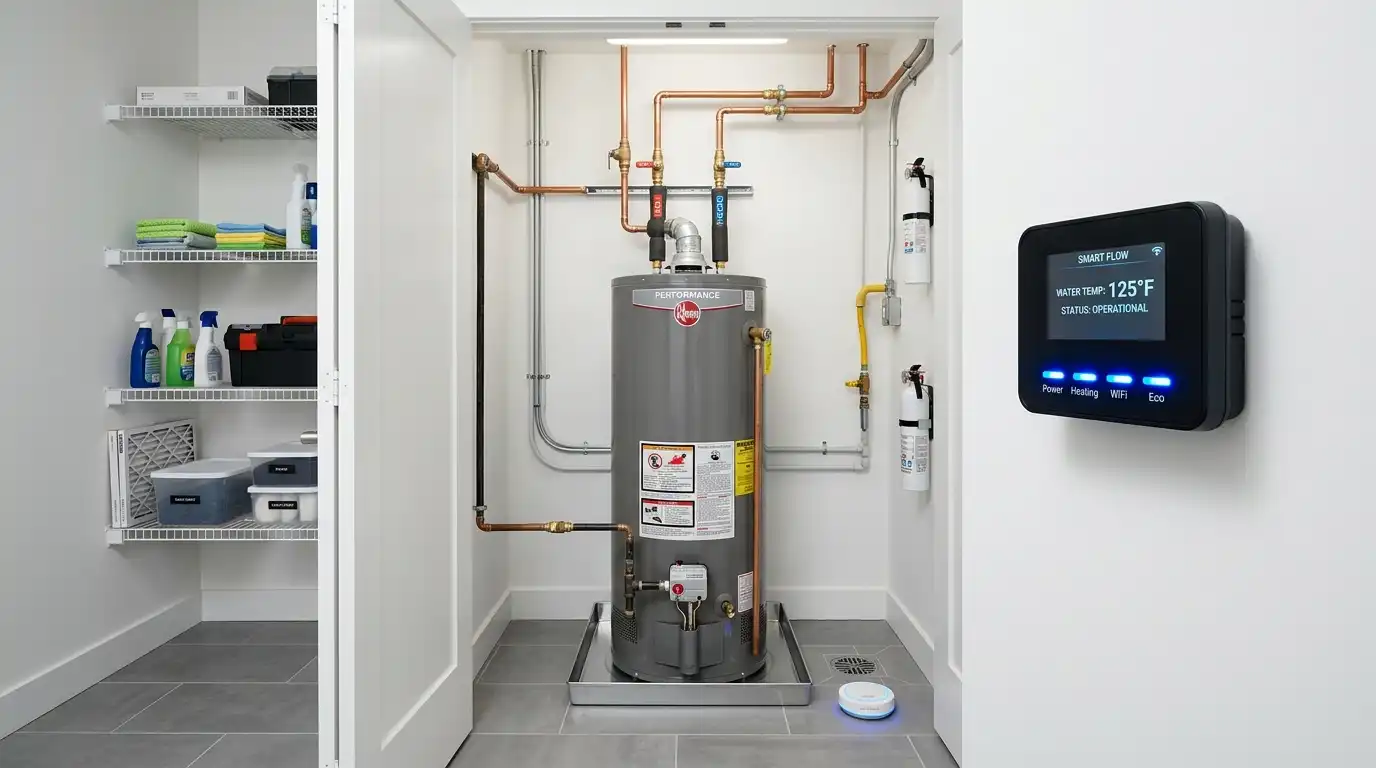
These compact, battery-powered pucks or strip sensors are placed directly in high-risk zones—such as under kitchen sinks, behind toilets, beneath dishwashers, and adjacent to water heaters. When water bridges the gold-plated metal contacts on the bottom of the sensor, it immediately triggers an internal alarm while transmitting a Wi-Fi or Zigbee alert through your smart home hub.
B. Inline Ultrasonic Flow Meters & Automated Valves
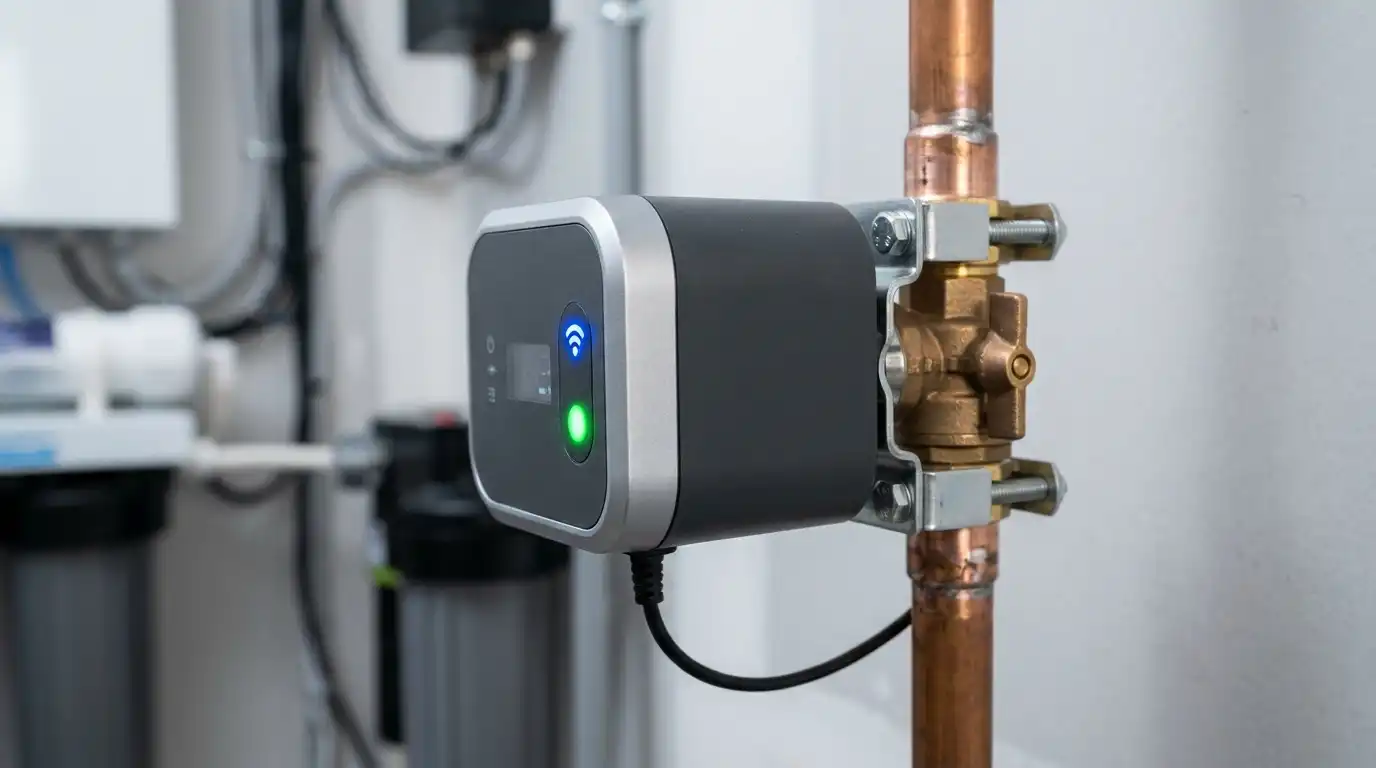
Mounted directly onto your home’s main water entry pipe, these motorized actuators analyze water usage patterns using micro-turbines or ultrasonic sound waves. Advanced flow meters measure pressure changes and continuous gallon usage. If water runs continuously for an abnormal period—indicating a burst pipe or running toilet—the motorized valve automatically rotates 90 degrees to cut off main water supply instantly.
To explore technical standards for plumbing efficiency and smart water management protocols, consult the EPA WaterSense Official Standards & Guidelines. These frameworks highlight how advanced water monitoring tech reduces household water waste.
3. Key Financial Benefits: The Tech Investment That Pays for Itself
While installing an inline smart valve and sensor suite requires an upfront financial investment, the system actively repays itself through several key mechanisms:
- Preventing Catastrophic Repair Costs: The average residential water damage claim exceeds $10,000 in structural repairs and personal property restoration. Preventing a single major leak pays for the hardware and installation costs many times over.
- Homeowners Insurance Premium Discounts: Major property insurance carriers actively incentivize smart home protection. Installing a professionally monitored or automatic water shut-off device frequently qualifies policyholders for direct annual discounts on home insurance premiums.
- Lowering Monthly Utility Bills: Undetected plumbing leaks—such as running flapper valves in toilets or slow pinhole drips in crawlspaces—can waste thousands of gallons of municipal water every month. Smart flow monitors detect these micro-leaks early, preventing inflated utility costs.
For research and expert consumer reviews on top-rated home security hardware and smart utility devices, review the Consumer Reports Home Security & Automation Resource Center. Their evaluations analyze reliability and sensor responsiveness across leading smart home brands.
4. Smart Home Platform Integration and Connectivity

Modern smart leak prevention tech integrates seamlessly into popular smart home ecosystems. Selecting devices that support universal connectivity standards ensures long-term reliability and cross-device automation:
- Matter & Thread Compatibility: Newer smart water sensors leverage Matter protocol support, allowing local device communication that operates reliably even if your primary home internet connection drops temporarily during a power outage.
- Custom Automation Routines: Through platforms like Apple Home, Google Home, or Amazon Alexa, you can create automated routines. For instance, when a leak sensor under the sink detects moisture, it can flash your smart LED bulbs red, trigger an audible siren, and close the main valve simultaneously.
- Cellular and Battery Backup Options: High-end main-line shut-off valves feature internal battery backups or integrated cellular modems, ensuring your home remains protected even during severe weather blackouts.
5. DIY vs. Professional Installation Considerations
Deciding between a DIY smart sensor setup or a professionally plumbed automatic valve depends on your technical comfort and home layout:
- DIY Puck Sensors: Battery-operated spot sensors require no plumbing tools. You simply pair them with your Wi-Fi network or smart hub and lay them on the floor near water appliances.
- Clamp-On Actuators: DIY-friendly motorized retrofits clamp over existing ball valves on your main water line. These require zero pipe cutting and mechanically turn your existing manual lever when a signal is received.
- Inline Ultrasonic Valves: High-precision inline flow meters require cutting into your main copper or PEX water supply line. For these units, hiring a licensed plumber ensures leak-free installation and keeps manufacturer warranties intact.
Conclusion: Proactive Protection for the Modern Home
Smart home technology is at its best when it solves real-world problems autonomously. By pairing spot leak sensors with an automated main line shut-off valve, you transform your home’s plumbing from a potential financial liability into a self-protecting asset. Investing in smart water monitoring today delivers unmatched peace of mind, insurance savings, and immediate protection against unexpected water damage.