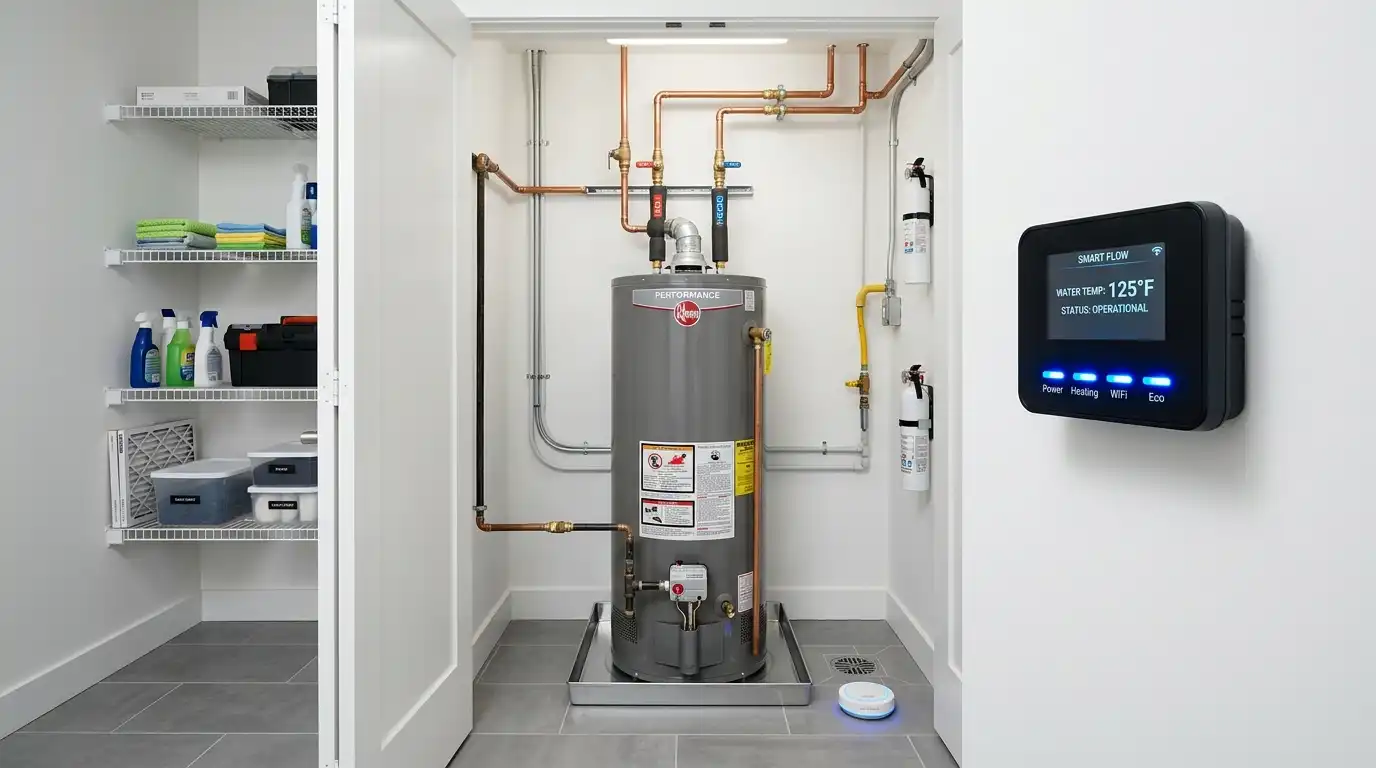
Why Retrofitting Smart Controls Makes Sense
Water heating remains the second largest energy expense in the average residential home, accounting for roughly 18% of total utility costs according to energy industry benchmark studies. Standard water heaters run continuously, maintaining tank temperatures 24 hours a day regardless of whether your household is awake, at work, or away on vacation. This continuous cycle leads to significant standby heat loss.
Retrofitting an existing tank with a smart controller resolves standby heat loss by giving you precise control over heating schedules. Instead of buying a completely new appliance, an aftermarket smart controller connects to your existing electrical wiring or gas control valve, letting you manage operational cycles dynamically through your smartphone or unified home automation system.
Key Financial & Operational Advantages:
- Fractional Initial Investment: A full smart water heater installation can run between $1,800 and $3,500. Quality smart controllers and automatic leak detection systems cost between $150 and $400, offering a payback period within 12 to 18 months.
- Time-of-Use (TOU) Rate Optimization: Utility providers increasingly use peak and off-peak pricing models. Smart controllers automatically shift heating cycles to off-peak hours when electricity rates are lowest.
- Demand Response Incentives: Many regional power companies offer direct bill credits or annual rebates to homeowners who connect smart water heater controllers to grid load-balancing programs.
The Critical Role of Automatic Leak Detection
While energy savings draw attention to smart controllers, disaster prevention offers the highest return on investment. According to major insurance carriers, water damage caused by plumbing failures ranks among the most common and costly residential property claims. Traditional water heater tanks typically fail from internal corrosion, leading to sudden leaks that spill 40 to 80 gallons of water across utility rooms, basements, or finished flooring within minutes.
Standalone water sensors issue an audible alarm when wet, but they cannot stop water flow if you are away from home. Integrated smart controller systems pair wireless surface sensors with motorized, inline ball valves installed directly on the cold water inlet pipe.
When the system detects moisture at the base of the tank or a sudden drop in line pressure, the smart hub takes immediate action:
- Instant Motorized Shut-Off: The controller signals the motorized valve to close completely within seconds, halting incoming water pressure.
- Power Disconnection: For electric water heaters, smart relays simultaneously cut electrical power to the heating elements, preventing dry-firing damage or electrical shorts.
- Immediate Smartphone Push Alerts: You receive instantaneous notifications via app alerts, SMS, or automated calls detailing the trigger event.
Key Technologies Driving 2026 Smart Retrofits
The latest generation of retrofittable smart controllers incorporates advanced home automation standards, making installation simpler and operational reliability higher than earlier Wi-Fi modules.
1. Matter & Thread Unified Compatibility
Older smart plugs and controllers required proprietary third-party apps that became obsolete or failed to sync with broader home ecosystems. The universal adoption of Matter over Thread protocols allows modern smart controllers to link natively with Apple Home, Google Home, Amazon Alexa, and Home Assistant without needing custom cloud bridges or unstable third-party plugins.
2. Machine Learning Usage Profiling
Modern smart controllers go beyond basic timer schedules. Embedded machine learning algorithms track your household’s historical hot water consumption patterns over two to three weeks. The system learns when your family takes morning showers, runs dishwashers, or does laundry, automatically preheating water just before peak usage windows and dropping into low-power Eco Modes during idle periods.
3. Real-Time Telemetry & kWh Tracking
 Understanding appliance energy draw requires accurate measurement. Smart controllers equipped with current transformer (CT) clamps monitor actual kilowatt-hour (kWh) draw continuously. You can view clear graphs within your smartphone app showing exact daily running costs, standby power consumption, and projected monthly savings.
Choosing the Right Controller for Your Setup
Before purchasing an aftermarket kit, verify compatibility with your existing plumbing and electrical infrastructure:
- Electric Tank Controllers: Electric water heaters generally run on 240-volt double-pole circuits drawing 20 to 30 amps. Ensure your smart controller uses a heavy-duty, high-amperage relay specifically rated for 240V resistive loads to avoid overheating risk.
- Gas Tank Controllers: Standard atmospheric or power-vented gas water heaters use millivolt or low-voltage gas control valves. Retrofit kits for gas units connect directly to the thermopile wiring or smart gas control modules, adjusting setpoints without interfering with pilot safety thermocouples.
- Sensor Placement Strategy: Position moisture sensing pucks at the lowest physical point on the drain pan, under flexible supply line connections, and adjacent to the temperature and pressure (T&P) relief valve discharge pipe.
For additional details on optimal system placement, tank sizing, and energy performance metrics, consult official efficiency guidelines published on the ENERGY STAR Appliance Guidance Directory.
Upgrade Your Existing Tank with Confidence
You do not need to spend thousands of dollars on a complete plumbing overhaul to enjoy the benefits of a modern smart home. Retrofitting your existing storage tank with a high-quality smart water heater controller and integrated shut-off leak detection system provides the ideal balance of energy management, utility bill savings, and flood protection.
By automating your heating schedules around actual family usage and securing your home against unexpected water damage, you turn an ordinary legacy water heater into an intelligent asset that pays for itself in short order.